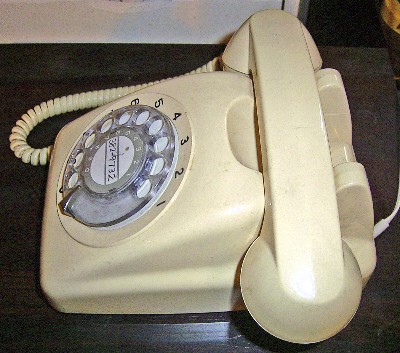
[ Top page ]

Main

Museum of Information and Communication Archives

October 20, 2006

An editor for Apple II

In 1979, i. e., when Apple II was used widely, a teacher of my high shool asked me to develope a program on Apple II. Because I wanted a program development tool, I developed a small-scale visual editor called BATE, which was written in Basic. I submitted an article on BATE to a magazine called I/O. The copyright of the article is probably owned by Kogaku-sha, but I believe it will not disturb their business by copying the article. So I put a copy here. (You can read the program list but I am sorry the article itself was written in Japanese.) If I submit an article now, I will use my real name, but I used a pen name then.

This program was my first practical program for a PC. With this editor, one can visually edit programs, i. e., one can change a text or a Basic program while looking at it. However, I had almost never used a good visual editor such as vi or emacs at that time. My favorite editor was the editor for Mitsubishi's mainframe computer called Melcom Cosmo 700. With this editor, we could edit a program while looking at about 25 lines, but it was basically a line editor. Because I mimicked this editor, one could edit a text by using commands such as "I" (Insert a line) or "C" (Change part of a line by using string matching).

Continue...

Production of 9080-based microcomputer

I am writing on crafting a microcomputer when I was in the first year of the university. When the Intel 8080 began to be sold at Akihabara, I wanted to build a microcomputer using the 8080. Although I had never developed a digital circuit, I bought a set of the AMD 9080, a second source of the 8080, and eight memory ICs (of 1 kbit), and I dared to wire the memory circuit using a soldering iron for analog circuits and with 1-mm vinyl cables and a universal circuit board. This wiring required much more efforts than I expected. It seemed to me a miracle when the microcomputer worked. But, anyway, I inputted a very short program using 16 address-input and 8 (8-bit) data-input toggle-switches, and ran the program. The result was displayed by the 8 LEDs. It took very much time to input a program by the toggle switches, so the microcomputer soon became unused after I ran only a few programs.

Until then, I had experiences to build hardwares, such as radios and stereo amplifiers, but I had almost never touched softwares. However, in contrast, after the above experience, I seldom touched hardware but often touched software. That was because the wiring of the microcomputer was so painful, and I decided not to build hardware. I can write that this decision led to myself of these years.
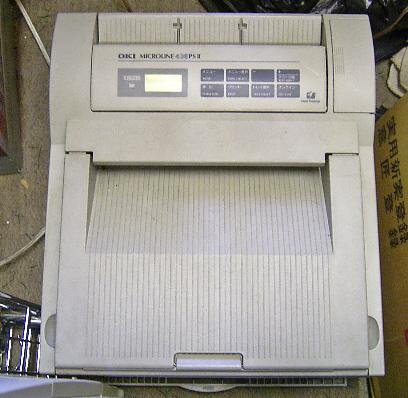
Continue...

July 2, 2007

iPhone -- too conservative to say "reinvent the phone"

I read that Steve Jobs used an expression "going to reinvent the phone" concerning iPhone in the Macworld San Francisco on January 9 this year. However, for me who intended to change the user interface of telephone drastically by a new medium called voiscape, iPhone seems to be much more conservative and it is not appropriate to use the expression "reinvent the phone".

Continue...

About Museum of Information and Communication

This page contains an archive of all entries posted to Blog from Kanada in the Museum of Information and Communication category. They are listed from oldest to newest.

Miscellaneous is the previous category.

Research methodology is the next category.

Many more can be found on the main index page or by looking through the archives.

Creative Commons License
This weblog is licensed under a Creative Commons License.
Powered by
Movable Type 3.36